Polyurethane Injection for Waterproofing & Leak Repair
What is Polyurethane Injection?
Polyurethane Injection is one of the most effective technologies for repairing water leaks and sealing concrete cracks and construction joints. The system works by injecting a specialized polyurethane resin into cracks and voids using professional injection pumps. Once the material comes into contact with water, it reacts rapidly and expands to form a closed-cell polyurethane foam that fills internal voids and permanently blocks water infiltration.
This system is capable of penetrating even the finest cracks and hidden water paths without extensive demolition, making it an ideal solution for active water leaks while preserving the integrity of the concrete structure and extending its service life. Polyurethane injection is widely used in basements, water tanks, tunnels, wastewater facilities, dams, canals, and other structures exposed to water ingress.
Why is Polyurethane Injection One of the Best Leak Repair Solutions?
Unlike conventional repair methods that only treat the surface, polyurethane injection seals the source of the leak from within the concrete. The injected resin penetrates cracks, joints, and internal voids before reacting with water and expanding to completely block water pathways, even under hydrostatic pressure.
Polyurethane resin provides excellent adhesion to concrete and performs effectively in both dry and wet cracks. It also minimizes the need for extensive demolition, allowing repairs to be completed quickly while maintaining the structural integrity of the building. These advantages make polyurethane injection one of the most reliable and efficient waterproofing repair systems available.
How Does Polyurethane Injection Work?
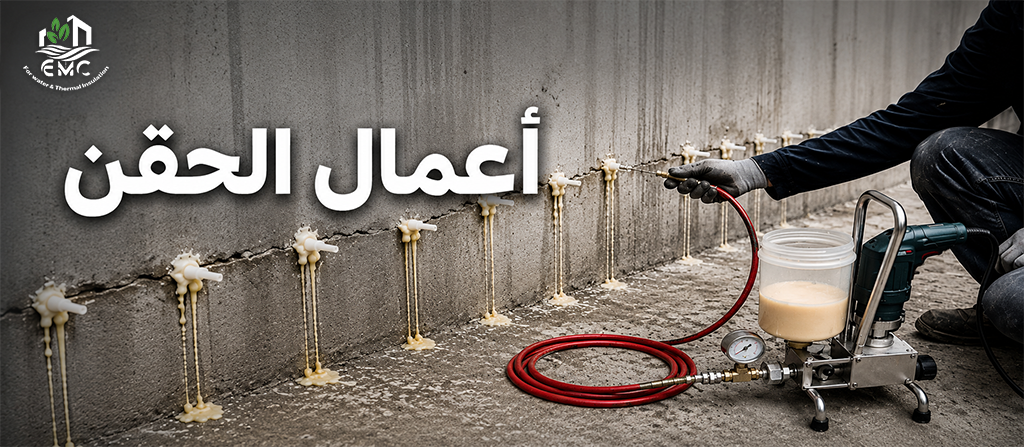
The process begins by identifying the location of cracks or active water leaks. Injection packers are then installed through strategically drilled holes to reach the internal crack path. A specialized injection pump is used to inject the polyurethane resin, allowing it to flow deep into the cracks, joints, and voids throughout the concrete structure.
When the resin comes into contact with water, it reacts immediately and expands to create a durable waterproof barrier that seals the leak from the inside. After the injection process is completed, the packers are removed and the drilled holes are repaired using a non-shrink polymer-modified repair mortar. Additional protective coatings may be applied when required to ensure long-term waterproofing performance.
System Advantages
Polyurethane injection is one of the most efficient solutions for waterproofing repairs, combining fast application with the ability to penetrate deep into cracks and internal voids within concrete structures. This provides a reliable and long-lasting solution for various types of water leakage. Key advantages include:
- Stops active water leaks directly at the source.
- Effectively seals cracks, construction joints, and internal voids.
- Reacts with water and expands to fill hidden leakage paths.
- Suitable for both dry and wet cracks.
- Provides excellent adhesion to concrete and structural substrates.
- Requires minimal demolition or concrete removal.
- Resistant to hydrostatic water pressure in below-grade structures.
- Helps protect reinforcing steel from moisture and corrosion.
- Suitable for both interior and exterior applications, including high-moisture environments.
- Fast installation with minimal disruption to facility operations.
- Extends the service life of concrete structures while reducing future maintenance costs.
- Effective for both fine hairline cracks and deep structural cracks.
Applications
Polyurethane injection is widely used in concrete structures affected by water leakage and cracking. It is suitable for both new construction and rehabilitation projects, including:
- Repairing active water leaks in concrete cracks.
- Construction joints and expansion joints.
- Basements and underground structures.
- Potable water tanks and underground reservoirs.
- Wastewater treatment plants and sewage tanks.
- Tunnels and underground infrastructure.
- Dams and water canals.
- Manholes and utility chambers.
- Gas and oil pipeline systems.
- Soil stabilization and void filling beneath foundations.
- Residential, commercial, and industrial concrete structures exposed to water ingress.
Application Process
1. Inspection & Surface Preparation
The process begins with a detailed site inspection to identify leakage points and crack locations. The affected area is then cleaned by removing loose materials and contaminants to ensure the concrete substrate is ready for injection.
2. Crack Preparation
Cracks are prepared as required by removing dust, debris, and loose particles. Damaged concrete and exposed reinforcement, if present, are repaired before injection to ensure optimum system performance.
3. Injection Packer Installation
Injection packers are installed through strategically drilled holes along the crack line. Their spacing and depth are selected according to the crack geometry to ensure complete resin penetration throughout the leakage path.
4. Polyurethane Resin Injection
The polyurethane resin is injected using a professional injection pump operating at pressures of up to 150 bar. The resin penetrates the crack network, reacts with water, and expands to form a waterproof barrier that permanently seals the leakage path.
5. Finishing & Final Protection
After the injection process is completed, the injection packers are removed and the drilled holes are sealed using a non-shrink repair mortar. Additional protective or waterproofing systems can be applied where required to ensure long-term durability and performance.